

Among the most common dental restorative procedures, dental crowns can repair damage to teeth that are fractured, broken, or worn over time. They restore teeth, giving them protection, strength, and shape as they are restored to full function. If you have been wondering whether a dental cap is appropriate for your teeth, here are five indications that it may be time for one.
At Falcon Dental Group, we know how important it is to preserve teeth and smiles, and Dr. Horacio Falcon explains why crowns are essential for protecting weak or broken teeth and restoring your smile to its full functional potential. Look out for the five indicators below, which may mean that it is time for an assessment of your teeth.
Why Do You Need a Dental Crown?
A dental crown has its place and purpose in keeping your smile looking and functioning optimally. This section will discuss five signs that may indicate you need a crown and how a crown can help keep your smile looking good for the rest of your life.
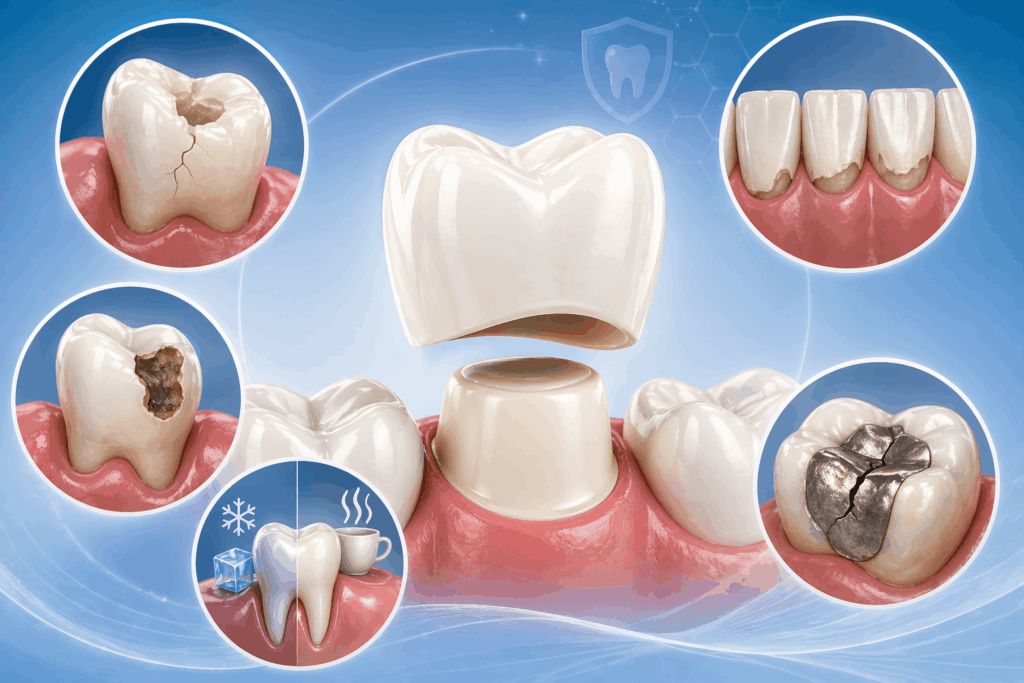
1. Cracked or Chipped Teeth
Damaged or chipped teeth aren’t just about aesthetics-they can be seriously damaging to your teeth. The smaller cracks can grow into much larger ones over time and also allow bacteria to enter the tooth, leading to infection. A dental crown in Harper Woods can cap the broken area, preventing the tooth from deteriorating further and supporting it in the meantime.
If you live in Harper Woods and you’ve injured your tooth or had an injury from wear and tear that damaged your tooth, then you need to have that examined by a dentist. If you continue to put it off, the condition could worsen, leading to an infection or even requiring further treatment.
2. Tooth Decay That’s Too Extensive for a Filling
One of the most common reasons people need crowns is tooth decay. Once a tooth is severely decayed to a level where a filling is no longer an option, you need to cap it to prevent further destruction of the tooth. When decay has been severe enough, the crown can essentially hold the tooth together, preventing the cavity from worsening.
Larger fillings are sometimes insufficient to hold a tooth together and may leave it vulnerable to breakage, which a crown can prevent. They restore a tooth to its natural shape.
3. Tooth Sensitivity That Won’t Go Away
While sensitive teeth can be many things, including decay and gum disease, if you find your teeth are constantly sensitive to heat and cold, it could be a sign that there is a crack somewhere along the tooth, or simply that the structure is weak and stimuli are being transmitted to the nerve.
The crown helps by insulating the tooth from temperature changes, reducing discomfort, and providing a barrier against irritants. If you’re in Harper Woods and dealing with ongoing tooth sensitivity, a dental cap could be just the solution to make you feel comfortable again.
4. Worn Down Teeth From Grinding
Teeth grinding (bruxism) can really wear down your tooth enamel, causing the teeth to eventually become thin, ragged, or even cracked. If left untreated, the grinding can eventually result in tooth loss and more significant problems. For grinding victims, a crown can act as a protective shell, repair damage caused by grinding, restore the tooth’s shape and function, and protect the enamel. If you are a grinder, we can help you find an appropriate remedy to protect your teeth, including crowns if required, at Falcon Dental Group.
5. Large Fillings That Have Lost Their Seal
Fillings, of course, repair damaged teeth. Unfortunately, sometimes these fillings will wear away over time, crack, or become loose. When a filling no longer fits correctly in the tooth, or if a cavity has formed behind the existing filling, a crown is the logical next step. A crown will completely cover the damaged tooth, restoring its integrity and preventing cavities and potential infections. This is particularly true for larger fillings, where increased pressure on a tooth that has already been damaged can compromise future integrity and eventually cause cracks.
How to Care for Your Dental Crown
Proper care of your dental cap is vital to its durability and your oral health. By adopting certain routines, you can maintain the good condition of your crown while safeguarding your remaining natural teeth. Here are a few easy methods that will assist you in the preservation of your crown:
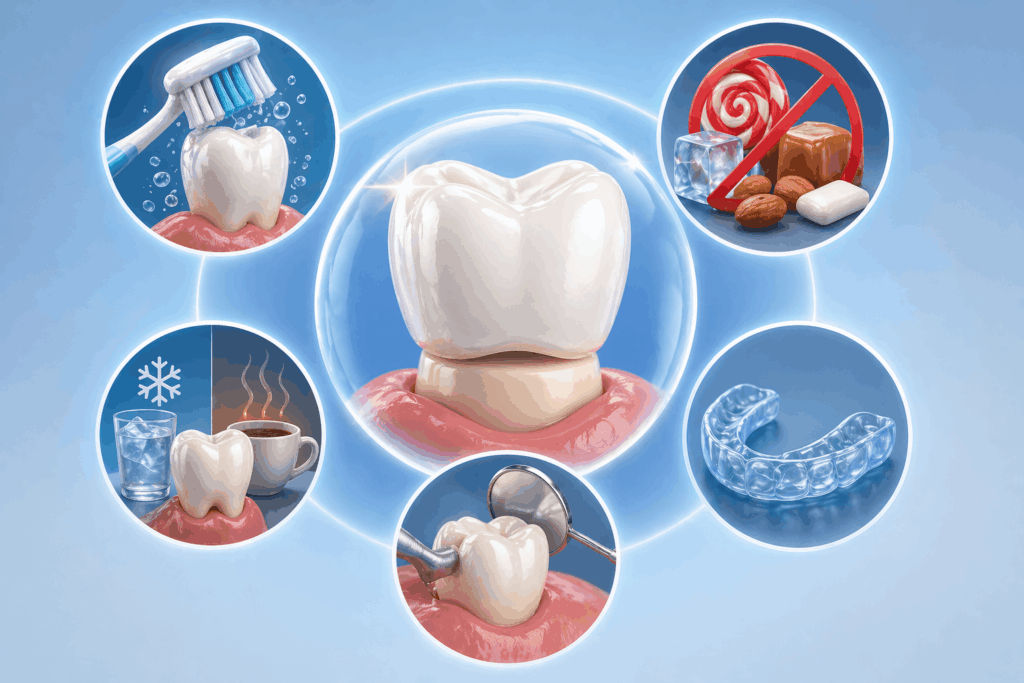
1. Brush and Floss Every Day
Your dental cap will benefit greatly from routine daily brushing and flossing, just as your natural teeth do. Ensure you use a soft-bristle toothbrush and fluoride toothpaste to avoid damaging the crown while keeping it clean.
2. Avoid Hard and Sticky Foods
It is possible to damage your dental cap by eating certain foods; these include hard items such as nuts, candy, or ice, as well as sticky products like gum and caramel, which can wear down the crown over time or cause it to dislodge. It would be best to steer clear of these foods and choose a softer alternative.
3. Use a Nightguard for Teeth Grinding
Teeth grinding, or Bruxism as it is medically referred to, can cause excessive wear to your crowns and natural teeth. It is advisable to have the dentist fit a nightguard, which should be worn when you are asleep and will act as a barrier between your crown and your teeth, effectively protecting it.
4. Attend Regular Check-Ups
Routine check-ups with your dentist are necessary to determine whether your dental cap remains sound and functional; they are also useful for detecting and preventing potential damage. During this appointment, your dentist will also make any necessary modifications to your crown.
5. Use a Nightguard if You Grind Your Teeth
Some people with a dental cap experience sensitivity to extremes of hot and cold. It is possible that the underlying tooth is irritated; if sensitivity persists, consult your dentist. With a few simple changes, your dental cap will serve you well for years.
Preserve Your Tooth with a Dental Crown
The moment you notice the slightest change (listed above), make an effort to keep your tooth safe until further decay takes hold. A dental cap is one way to maintain the functionality, appearance, and strength of a damaged or vulnerable tooth. With our high-quality dental cap that will perfectly blend in with the appearance of your own teeth, you will feel proud to show off your smile again.
If you think you may need a dental crown in Harper Woods, call us today to schedule an appointment with Falcon Dental Group. Dr. Horacio Falcn and his team will examine your dental situation, determine whether you need a crown, and develop a plan to ensure that you have strong, happy teeth. Give your smile the protection it deserves!
Questions People Ask About Dental Crowns
How do I know if my tooth needs a crown?
A tooth may need a crown if it’s cracked, chipped, excessively decayed, or sensitive. If you’re experiencing discomfort or noticing structural damage, consult your dentist for an evaluation.
Can a crown restore a broken tooth?
Yes, dental crowns are an excellent way to restore a broken tooth. They cover and protect the entire tooth, allowing it to regain its strength and function.
How long do dental crowns last?
Dental crowns typically last between 10 and 15 years, depending on the material used and how well you care for your teeth. Regular dental check-ups can help ensure they last longer.
Will a dental crown look natural?
Yes! Dental crowns are designed to match the color and shape of your natural teeth. Materials like porcelain or ceramic provide a seamless, natural-looking restoration.
Is getting a dental crown painful?
The process of placing a dental crown is usually pain-free, as local anesthesia is used to numb the area. Afterward, some mild discomfort or sensitivity may occur but should subside quickly.
Can I eat normally with a dental crown?
Once your crown is placed, you should be able to eat normally. However, it’s a good idea to avoid very hard foods for the first few days to allow the crown to settle in properly.